by Lim Soon Hock, Empowering Churches
After 30 years as a pastor I came to realise (I’m a slow learner) that one of the most important ingredients differentiating poor, good and great churches is church culture. Does a church have the right kind of culture for it to be a good or great church?
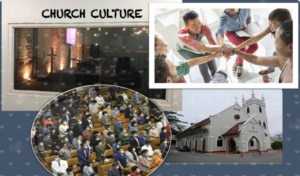
The unexpected disruption caused by the Covid-19 pandemic has made the issue of church culture even more important.
For one, the cohesiveness of the church is very much put to the test because in-person meetings have been curtailed. This is especially disruptive for corporate worship, which is traditionally the main church event.
As I write this, Malaysia is reeling from a third wave of the virus, and much of the country was again under a Movement Control Order for the last two months. Churches have resorted to the use of online technology.
Will a church survive—nay, thrive in the pandemic? I believe the answer depends very much on its culture.
A Crisis Shows Up a Church’s Real Culture
Aubrey Malphurs, in his book Look Before You Lead: How to Discern & Shape Your Church Culture, defines a church’s congregational culture as “its unique expression of its shared values and beliefs”(p20). That is, a church’s congregational culture is made up of three components: its beliefs, values and behaviour. When beliefs and values are held in common by the majority in the church and are then actually seen in the people’s behaviour, they become culture—they give expression to the church’s unique identity.
It is this congregational culture that determines whether a church simply survives or thrives in this present challenge. Unsurprisingly, it is in a time of crisis that the real culture of a congregation becomes clearly evident. For example, is there a real culture of commitment, sacrifice, faithfulness and the like in the church? Or, were they just aspirational values? Or, worse yet, were they simply wishful thinking?
In particular, does the church have a culture where every member is connected, committed and participating in a small group? At a time when large gatherings are curtailed, small groups are the best vehicles for fellowship, discipleship and even outreach. This may be done online, in-person or in a hybrid form.
It is never too late to start a small group ministry or to encourage members to get into one. However, it is much more advantageous if small groups were already part and parcel of the culture of the church. The difference between the two is like an athlete fumbling to put on his running shoes when the starting pistol goes off and an athlete who already has his shoes on.
The Roles of the Pastor and Consultant in Shaping Church Culture
If the culture of a church is vital to the success of the church, it is inevitable that conscious effort is taken to shape the church’s culture so that it produces a healthy church. Malphurs states that the person that has the greatest responsibility to shape a church’s culture is the pastor (p129). It is by no means an easy task, because shaping congregational culture requires change. Malphurs explains that preparation, personnel and process are required to shape the culture of a church (p10-12).
I believe that church consultants have a role to play to help pastors and church leaders understand the importance of church culture. They can act as the leaders’ sounding board as the latter pursue a conscious effort to shape their congregational culture. Moreover, church consultants can study and analyse the real culture of the church (which the leaders may have blind spots), and suggest ways to develop the church’s unique and desired congregational culture that is Scripture-faithful, healthy and life-giving.
The importance of shaping congregational culture as a strategic means for developing healthy churches is found in Malphurs’ statement, “we’ve discovered that it’s a waste of time and money to attempt to lead a culturally toxic church that clings to the traditions of men rather than the clear teaching of Scripture through the strategic-envisioning process,” (p17). Hence, I believe that shaping congregational culture is an indispensable requirement to develop healthy churches.
Reference: Mulphurs, Aubrey. Look Before You Lead: How to Discern & Shape Your Church Culture. Grand Rapids, MI: Baker Books, 2013
This article was first written for the the Society for Church Consulting blog posts on 15 December 2020. You may access it here.
 This is where the organic-missional approach to church health needs to be seriously considered. The primary proponent of this approach is Neil Cole who wrote Organic Church: Growing Faith Where Life Happens.
 Colin Marshall and Tony Payne’s The Trellis And The Vine: The Ministry Mind-Shift That Changes Everything
 models of church.
 John Stott’s The Living Church: Convictions of a Lifelong Pastor
 In this article I will review two significant publications that represent each of these approaches. Due to the limitation on the length of the article, the second book in each approach is given less treatment than the first book. I conclude this review of church health literature with a discussion on how all three approaches together may help toward a greater understanding of church health.
 Another principle approach to church health is found in Stephen A. Macchia’s Becoming a Healthy Church: 10 Characteristics.
 While Wagner’s shift did not in itself precipitate the diversification of church growth teaching, it however, left an open field for new ideas about church growth to be introduced
 The second question I posed was: what are the irreducible principles for church growth? From the review of church growth literature, I believe they would be:
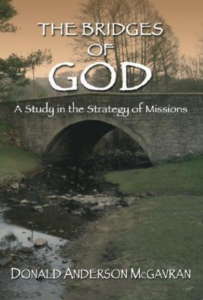 As a result, the teaching on church growth that was already evolving became even more diversified. Thom S. Rainer’s The Book of Church Growth (1993) provides a very helpful overview of the history and diversification in church growth teaching.
 In a later book Strategies for Church Growth (1987) Wagner starts by revisiting some of the basic church growth principles. He explains how the advocates of CGM understand the terms commonly used in Christian circles. For example, what does “make disciples” mean? Wagner says that “The raw material of making disciples in the Great Commission sense is unbelievers who need to commit their lives to Christ for the first time. The raw material of modern ‘disciple making’ is Christians who need to be helped along the continuing road of Christian discipleship.”
 While pastoring I had read many books including Peter Wagner’s works on church growth, Rick Warren’s Purpose Driven Church, Christian Schwarz’s Natural Church Development, Thom Rainer’s and Eric Geiger’s Simple Church, Gary McIntosh’s One Size Doesn’t Fit All and Aubrey Malphurs’ Advanced Strategic Planning. They were instrumental in shaping my philosophy of church ministry. The way I led the churches under my care reflected my convictions. I had come to the conclusion that it was critically important for churches to be healthy so that they can grow. On hindsight, the Lord was already preparing me for a ministry of church consultation with a focus on church health.
 The work of church consultation in Malaysia faces a number of challenges.
 Let me give you four factors that will help you determine what you may write about, especially if it’s your first book.

 The event that sparked the writing of the book was a seminar I did for a young people’s church in October 2019. It was not my first time teaching the material. However, an evaluation the seminar made me realise that there was just too much material for the participants to digest. I decided that it would be better for me to put the teaching into a book so that people can read it at their own pace. They can also take time to think through the principles and apply them into their lives.
 Then, the final part—printing the book. A slot for early March had been set with the printer to print the book. It was rush time for the layout artist to get everything print ready by the deadline. We managed to do that by a whisker. The printer sent me a mock-up of the book for one final check. And even at that final stage there were still typo-errors. Corrections were made and the file was sent to the printers again with a go-ahead. Then came the MCO!…and a wait of nearly three months!
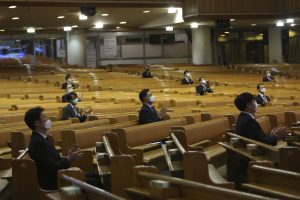 What constitutes a large gathering? According to a report in TheEdgeMarkets it is anything above 250 people (13 March 2020). However, according to theStar online it is anything above 50 people (4 April 2020). On top of this the authorities may still require people to keep a distance of at least one metre (maybe even two metres) from one another. If this is implemented the capacity of a church’s worship hall will immediately be reduced to hold at most one third of the usual crowd at any one time.
 Clearly, church is not just about the worship service. Church ultimately is about relationships (vertical and horizontal), discipleship (or discipling) and reaching out to the world (to win the spiritually lost and to impact our world). If worship services are cut shorter to cater for multiple services and the live-stream “audience”, coupled with social distancing and quick exits from the church building, the worship services are not going to cut it as far as the above mentioned objectives are concerned.